Your coffee table is more than just a place to rest your morning cup—it’s the centerpiece of your living room that can make or break your entire space. In fact, learning how to style your coffee table is one of the quickest ways to transform your home’s aesthetic without breaking the bank. Moreover, when styled correctly, this humble piece of furniture becomes a conversation starter and a reflection of your personal taste.
However, many homeowners struggle with coffee table styling, often ending up with cluttered surfaces or sterile, magazine-perfect setups that feel cold and uninviting. Therefore, understanding the principles that interior designers use can help you create a balanced, beautiful display that’s both functional and eye-catching. In this comprehensive guide, we’ll explore professional techniques for how to style your coffee table that you can implement immediately, regardless of your budget or design experience.

Understanding the Foundation of Coffee Table Design
Before diving into specific styling techniques, it’s essential to understand that successful coffee table decor starts with your table itself. First and foremost, consider the size, shape, and material of your coffee table, as these factors will influence every styling decision you make. For instance, a large rectangular wooden table offers different opportunities than a small round glass one.
Additionally, think about your lifestyle needs. If you have young children, you’ll want to avoid delicate items that can easily break. Similarly, if you frequently entertain guests, you’ll need to leave enough surface space for drinks and snacks. Consequently, the best coffee table styling balances aesthetics with practicality, creating a space that looks beautiful while serving your daily needs.
Furthermore, your coffee table should complement your existing furniture and overall room design. Nevertheless, it can also serve as an opportunity to introduce new textures, colors, or styles that add visual interest to your space. Therefore, approach your coffee table as both a functional piece and a canvas for creative expression.
The Rule of Three and Visual Balance
Interior designers frequently rely on the “rule of three” when learning how to style your coffee table effectively. Essentially, this principle suggests that objects grouped in odd numbers, particularly three, create more visual interest than even-numbered arrangements. Moreover, this technique works because our eyes naturally find odd-numbered groupings more dynamic and engaging.
To implement this rule, start by selecting three primary elements for your coffee table. For example, you might choose a stack of books, a decorative object, and a small plant or floral arrangement. However, these three items shouldn’t all be the same height or size. Instead, vary the heights to create visual rhythm and prevent your display from looking flat or monotonous.
Additionally, consider the concept of visual weight when arranging your items. A large, solid object carries more visual weight than a delicate, transparent one. Therefore, balance heavier items on one side with lighter elements on the other to achieve equilibrium. Meanwhile, leave negative space—empty areas on your table—to prevent the surface from feeling overcrowded. In fact, negative space is just as important as the objects themselves in creating a sophisticated, designer-worthy look.
Layering Textures and Materials for Depth
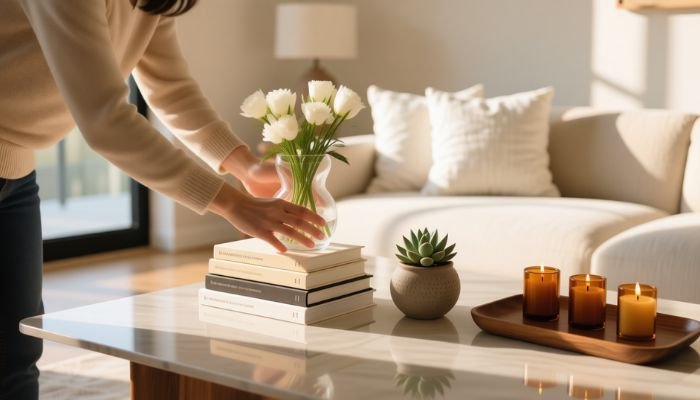
One secret that professionals use when figuring out how to style your coffee table involves layering different textures and materials to create depth and visual interest. Indeed, combining various surfaces and finishes prevents your display from looking one-dimensional or boring. Furthermore, this technique adds a tactile quality that invites people to engage with your space.
Start by incorporating natural elements like wood, stone, or woven materials as your base layer. For instance, a wooden tray or stone coaster set provides a grounding element that anchors your display. Next, add softer textures through books with linen covers, ceramic vessels, or metal accents. Subsequently, you might introduce glass or crystal elements to reflect light and add sparkle to your arrangement.
Moreover, don’t forget about organic textures like fresh flowers, greenery, or even interesting branches. These living elements bring life and movement to your coffee table decor while connecting your indoor space to nature. However, be mindful not to overcrowd your table with too many competing textures. Instead, aim for three to five different materials that complement rather than clash with each other. As a result, your coffee table will have sophisticated, layered dimension that catches the eye without overwhelming the senses.
Creating Functional Zones on Your Surface
Professional designers know that learning how to style your coffee table means balancing beauty with functionality by creating distinct zones. Specifically, dividing your coffee table into practical areas ensures that your styling remains livable rather than purely decorative. Therefore, consider how you actually use this surface in your daily life and design accordingly.
First, designate one zone for decorative elements—this is where your styled groupings will live. Meanwhile, reserve another area for functional items like remote controls, which you can contain in an attractive box or tray to keep them organized yet accessible. Additionally, you might create a zone for beverages by placing coasters in a designated spot, or for reading materials with a small basket tucked underneath the table.
Furthermore, using trays is an excellent strategy for defining these zones while maintaining flexibility. A decorative tray can corral smaller items, making them easy to move when you need the full table surface for entertaining. Consequently, you can quickly transition from everyday styling to party-ready by simply relocating one tray. This approach demonstrates that beautiful coffee table decor doesn’t have to sacrifice practicality, and in fact, the most successful designs seamlessly blend both elements together.
Incorporating Books as Design Elements
Books are an interior designer’s secret weapon when mastering how to style your coffee table because they serve multiple purposes simultaneously. Not only do they provide height variation and color, but they also reveal your personality and interests to guests. Moreover, coffee table books have become an art form unto themselves, with stunning photography and design that makes them worthy of display.
When selecting books for your coffee table, choose volumes that genuinely interest you rather than purchasing them solely for their covers. However, do pay attention to the spine and cover colors, as these should complement your room’s color palette. Stack two to four books horizontally to create a platform for other objects, or stand a particularly beautiful book vertically as a focal point. Additionally, vary the sizes and thicknesses of your book stacks to create visual interest.
Furthermore, consider the subjects of your books as conversation starters. Travel photography, art collections, fashion, architecture, or culinary books all work beautifully and give guests insight into your passions. Meanwhile, avoid overloading your table with too many books, which can make the space feel cluttered. Instead, limit yourself to one or two carefully curated stacks that enhance rather than dominate your overall design.
Adding Life with Plants and Florals
No guide on how to style your coffee table would be complete without discussing the importance of living elements. Indeed, plants and flowers bring energy, color, and a sense of freshness to any space that artificial objects simply cannot replicate. Moreover, they soften hard edges and introduce organic shapes that contrast beautifully with geometric furniture lines.
For coffee tables, low-maintenance options work best since they’re front and center in your living space. Succulents, air plants, or small potted herbs like rosemary or lavender provide greenery without requiring constant attention. Alternatively, fresh flowers in a simple vase create an elegant focal point, though they’ll need weekly replacement. Meanwhile, high-quality faux florals have become increasingly realistic and offer a permanent solution that still looks fresh.
When incorporating plants into your coffee table styling, consider the scale carefully. A massive floral arrangement might be stunning but could obstruct conversation or block the television. Therefore, opt for arrangements that stay below eye level when people are seated. Additionally, place plants on one side of your table rather than dead center to maintain functionality. As a result, you’ll achieve that designer touch of bringing the outdoors in while keeping your space practical for everyday living.
Choosing Statement Objects and Personal Touches
Learning how to style your coffee table ultimately means curating objects that tell your unique story. Consequently, every designer-worthy coffee table includes at least one statement piece—an object that draws the eye and sparks conversation. Furthermore, these pieces should reflect your personality, travels, or interests, making your space feel authentically yours rather than catalog-perfect.
Statement objects might include sculptural pieces, unique ceramics, vintage finds from antique markets, or souvenirs from meaningful trips. For example, a beautiful agate geode, an architectural model, or an interesting piece of driftwood can serve as your focal point. However, these items should complement your overall color scheme and style rather than feeling completely out of place.
In addition to statement pieces, incorporate personal touches that make your space feel lived-in and loved. Family photos in stylish frames, handmade ceramics from local artisans, or inherited pieces from relatives all add warmth and character. Nevertheless, be selective about what you display—too many personal items can make your table feel cluttered. Instead, rotate objects seasonally to keep your display fresh and interesting while honoring different memories and treasures throughout the year.
Mastering Scale and Proportion
Understanding scale and proportion is crucial when learning how to style your coffee table like a professional. Essentially, this means ensuring that the size of your decorative objects relates appropriately to both the table itself and the surrounding furniture. Moreover, getting these relationships right prevents your styling from feeling awkward or unbalanced.
As a general rule, your tallest decorative object shouldn’t exceed half the height of your sofa’s arm or back. Otherwise, it can block sightlines and make the space feel cramped. Additionally, consider the footprint of your objects on the table surface. If your decorations cover more than two-thirds of the available space, you’ve likely overdone it. Therefore, remember that negative space is your friend in creating a sophisticated, breathable arrangement.
Furthermore, think about the visual weight distribution across your entire living room. If your coffee table styling is very heavy and dark, it might pull too much attention away from other focal points in the room. Conversely, if everything else in your space is bold and your coffee table styling is minimal, it might feel incomplete. Consequently, step back and view your room as a whole, adjusting your coffee table decor until it feels harmoniously integrated with the surrounding design elements.
Seasonal Updates and Styling Flexibility
One advantage of mastering how to style your coffee table is the ease with which you can update your look seasonally without major renovations. Indeed, swapping out a few key elements every few months keeps your space feeling fresh and current. Moreover, seasonal styling allows you to celebrate holidays and changing weather while experimenting with different aesthetics.
For spring and summer, consider lighter colors, fresh flowers, and natural materials like seagrass or bamboo. Meanwhile, autumn calls for warmer tones, small pumpkins or gourds, and cozy textures like velvet or wool. Subsequently, winter styling might include evergreen branches, metallic accents, and candles that create a warm, inviting glow. However, maintain some constant elements throughout the year to provide continuity and prevent your styling from feeling disjointed.
Additionally, don’t feel pressured to completely overhaul your coffee table styling with each season. Instead, simply swap out one or two elements while keeping your base items consistent. For instance, you might keep your book stack and decorative tray year-round but change the flowers, add seasonal objects, or switch out throw pillows on your nearby sofa. As a result, you’ll achieve a fresh look without the expense or effort of constantly purchasing new decor items.
Common Mistakes to Avoid
Even with the best intentions, certain pitfalls can undermine your efforts when learning how to style your coffee table. First and foremost, overcrowding ranks as the most common mistake homeowners make. While you might love all your decorative objects, displaying everything at once creates visual chaos rather than curated elegance. Therefore, edit ruthlessly and remember that less is genuinely more in sophisticated design.
Another frequent error involves neglecting functionality in pursuit of aesthetics. Your coffee table must work for your lifestyle, not just look pretty for Instagram. Consequently, if you can’t comfortably place a drink on your table or if you’re constantly moving decorations to use the surface, you’ve prioritized form over function. Instead, aim for that sweet spot where beauty and practicality coexist harmoniously.
Furthermore, many people forget to consider viewing angles when styling their coffee tables. What looks perfect from the sofa might appear completely different from the room’s entrance or from dining area sightlines. Therefore, walk around your space and view your coffee table from multiple angles, adjusting your arrangement until it looks intentional from every perspective. Additionally, avoid matchy-matchy styling where everything is the same color or style—variation creates interest while uniformity can feel boring and predictable.
Final Thoughts
Mastering how to style your coffee table transforms this functional piece into a design statement that elevates your entire living space. By applying these professional techniques—from the rule of three to seasonal updates—you can create a coffee table display that’s both beautiful and livable. Remember, the best styling reflects your personality while maintaining the flexibility to adapt to your daily needs.
Ready to find the perfect pieces to complete your coffee table styling? Visit Better Than One to explore curated home decor items that will help you achieve that designer look you’ve been dreaming about. Whether you’re searching for statement objects, decorative trays, or unique conversation pieces, you’ll discover thoughtfully selected options that make styling effortless.
For additional inspiration and Brazilian design perspectives, check out Casa Vogue Brasil, where you’ll find stunning examples of coffee table styling and broader interior design trends that can inform your decorating decisions.
What’s your biggest challenge when styling your coffee table? Share your thoughts in the comments below, and let’s help each other create more beautiful living spaces!
Frequently Asked Questions
How many items should be on a coffee table?
Typically, three to five items create the most visually appealing arrangement without overcrowding. However, this depends on your table size—larger tables can accommodate more objects while smaller surfaces should remain minimal. Remember to include negative space as part of your design.
What is the 2/3 rule for coffee tables?
The 2/3 rule suggests that your coffee table should be approximately two-thirds the length of your sofa. This proportion creates visual balance and ensures the table is functional without overwhelming or underwhelming the space. When styling, aim to leave at least one-third of the surface empty.
Should coffee table decor be symmetrical?
While symmetry can work beautifully, asymmetrical arrangements typically feel more dynamic and interesting. Interior designers often prefer asymmetrical styling because it appears more natural and collected over time rather than overly staged. Balance visual weight rather than creating mirror images.
How do I style a coffee table with kids?
Choose durable, unbreakable objects and keep fragile items out of reach. Use a large tray to corral decorations, making them easy to remove when kids need the surface for activities. Consider a storage ottoman or table with drawers to hide clutter quickly while maintaining a styled appearance.
What should you not put on a coffee table?
Avoid extremely tall objects that block conversation, overly fragile items in high-traffic homes, or anything with strong scents that might overwhelm the space. Additionally, skip clutter like mail, keys, or random items that accumulate—these detract from your intentional styling and create visual chaos.