Creating a beautiful living space doesn’t require filling every corner with furniture and accessories. In fact, the opposite is often true. Minimalist living room decor has become increasingly popular because it offers a refreshing alternative to cluttered, overwhelming spaces. Moreover, this design approach focuses on intentionality, functionality, and creating an environment where you can truly breathe and relax.
Therefore, if you’ve been dreaming of transforming your living room into a serene sanctuary, you’re in the right place. Throughout this article, we’ll explore practical ideas that will help you achieve that clean, elegant aesthetic you’ve been craving. Additionally, we’ll discuss how to make thoughtful choices that reflect your personal style while maintaining the core principles of minimalism.

Understanding the Core Principles of Minimalist Living Room Decor
Before diving into specific ideas, it’s essential to understand what minimalist design truly means. Consequently, many people mistakenly think minimalism equals stark, cold spaces with nothing in them. However, authentic minimalist living room decor is about curating your space thoughtfully rather than simply removing everything.
The foundation lies in choosing quality over quantity. Furthermore, every piece in your room should serve a purpose, whether functional or bringing you genuine joy. This philosophy, inspired by the concept of intentional living, encourages you to evaluate each item critically. Similarly, minimalist spaces emphasize clean lines, neutral color palettes, and plenty of negative space that allows your room to feel open and inviting.
Embracing Neutral Color Schemes for Timeless Appeal
One of the most effective ways to achieve minimalist living room decor involves selecting a cohesive neutral color palette. Therefore, consider starting with a base of whites, beiges, grays, or soft earth tones that create a calming atmosphere throughout your space.
Nevertheless, neutral doesn’t mean boring. In fact, you can create incredible depth by layering different shades and textures within your chosen color family. For instance, pair a warm cream sofa with light gray walls and add interest through natural wood tones in your coffee table. Additionally, incorporating subtle variations in your neutrals prevents the space from feeling flat or one-dimensional.
According to design experts at Architectural Digest, neutral palettes also provide flexibility for future updates since you can easily swap accent pieces without clashing with your foundational colors.
Selecting Statement Furniture with Clean Lines
When implementing minimalist living room decor, furniture selection becomes crucial. Therefore, choose pieces with simple silhouettes and clean lines that embody the minimalist aesthetic. Moreover, each furniture item should be both beautiful and functional, eliminating anything that serves no real purpose.
Consider investing in a streamlined sofa with straight edges rather than ornate, overstuffed options. Similarly, opt for a sleek coffee table with minimal ornamentation. Furthermore, floating furniture away from walls can actually make your room feel more spacious and intentional. This approach creates natural pathways and allows energy to flow freely throughout the space.
Maximizing Natural Light and Open Space
Natural light is absolutely essential for successful minimalist living room decor. Consequently, remove heavy curtains that block sunlight and replace them with sheer panels or simple roller shades. Additionally, keeping windows unobstructed allows maximum light penetration, which naturally makes your space feel larger and more welcoming.
Meanwhile, embrace negative space as a design element rather than something that needs filling. In other words, those empty areas on your walls and floors aren’t mistakes—they’re intentional choices that give your room breathing room. Furthermore, this approach reduces visual clutter and creates a sense of calm that’s fundamental to minimalist design.
Incorporating Texture Through Natural Materials
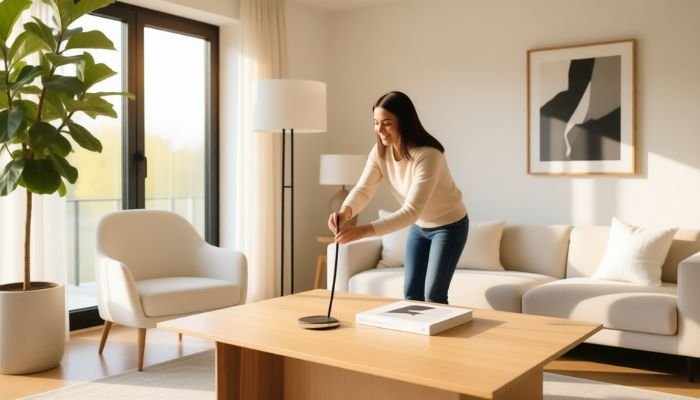
Although minimalist spaces rely on simplicity, they shouldn’t feel sterile. Instead, introduce warmth and interest through natural materials and varied textures. For example, combine smooth leather with nubby linen, polished wood with rough stone, or sleek metal with organic cotton.
These textural elements add depth to your minimalist living room decor without compromising the clean aesthetic. Moreover, natural materials like wood, stone, wool, and linen bring an organic quality that makes minimalist spaces feel inviting rather than cold. Additionally, these materials age beautifully, developing character over time that synthetic alternatives simply cannot match.
Creating Focal Points with Intentional Art
Minimalist design doesn’t mean bare walls. However, it does require careful curation of artwork. Therefore, select one or two statement pieces that truly speak to you rather than covering every available wall surface. Furthermore, larger-scale artwork often works better in minimalist spaces than gallery walls with multiple small pieces.
When incorporating art into your minimalist living room decor, consider pieces with simple compositions, abstract designs, or black-and-white photography. Similarly, the framing should be equally simple—think clean lines and minimal borders. This approach ensures your artwork enhances the space without overwhelming it.
Optimizing Storage Solutions to Reduce Visual Clutter
One challenge with minimalist living room decor involves managing everyday items that need storage. Consequently, invest in furniture pieces that offer hidden storage capabilities. For instance, choose coffee tables with drawers, ottomans that open for storage, or media consoles with closed cabinets.
Moreover, everything should have a designated home, which prevents clutter from accumulating on surfaces. Additionally, regular decluttering sessions help maintain the minimalist aesthetic you’ve worked hard to create. Remember, minimalism isn’t just about the initial design—it’s an ongoing practice of intentional living.
Selecting Strategic Lighting Fixtures
Lighting plays a crucial role in establishing ambiance within your minimalist living room decor. Therefore, choose fixtures with simple, sculptural designs that serve as functional art pieces. Furthermore, layered lighting—combining ambient, task, and accent lighting—creates depth and flexibility in your space.
Consider installing dimmer switches that allow you to adjust lighting levels based on time of day and activity. Meanwhile, avoid ornate chandeliers or fussy table lamps that contradict the minimalist aesthetic. Instead, opt for sleek floor lamps, simple pendant lights, or recessed lighting that provides illumination without drawing excessive attention.
Bringing Life with Carefully Chosen Greenery
Plants are wonderful additions to minimalist living room decor because they add life, color, and air-purifying benefits. However, choose your plants strategically rather than filling every surface with pots. For example, select one or two larger statement plants like a fiddle leaf fig or snake plant rather than numerous small varieties.
Additionally, choose planters that align with your minimalist aesthetic—simple ceramic pots in neutral tones or modern geometric containers work beautifully. Furthermore, plants in minimalist spaces should enhance rather than clutter, so give each plant adequate space to shine individually.
Implementing the “One In, One Out” Rule
Maintaining your minimalist living room decor requires ongoing commitment. Therefore, adopt the “one in, one out” principle: whenever you bring something new into your living room, remove something else. This practice prevents gradual accumulation of items that can undermine your minimalist goals.
Moreover, this approach encourages more thoughtful purchasing decisions. Before acquiring anything new, ask yourself whether it truly adds value to your space and life. Consequently, you’ll find yourself making better choices that align with your minimalist vision.
Final Thoughts on Your Minimalist Journey
Creating beautiful minimalist living room decor is ultimately about designing a space that supports your lifestyle and brings you peace. Therefore, remember that minimalism isn’t about deprivation—it’s about making room for what truly matters. Furthermore, your minimalist living room should reflect your personality while maintaining that clean, elegant aesthetic.
As you embark on this transformation, take your time making decisions. Additionally, don’t feel pressured to achieve perfection immediately. Instead, gradually curate your space, removing what doesn’t serve you and thoughtfully adding pieces that do.
Looking for more inspiration and design ideas? Navigate through the Better Than One website, where you’ll discover additional resources for creating beautiful, intentional spaces. Explore the site to find curated collections and expert advice that will support your minimalist design journey.
What aspect of minimalist living room decor excites you most? Have you already started simplifying your space, or are you just beginning your minimalist journey? Share your experiences and questions in the comments below—we’d love to hear about your transformation!
Frequently Asked Questions
What is minimalist living room decor? Minimalist living room decor is a design approach that emphasizes simplicity, functionality, and intentionality. It focuses on quality over quantity, featuring clean lines, neutral colors, and carefully curated pieces that serve specific purposes.
How do I start creating a minimalist living room? Begin by decluttering your current space, removing items that don’t serve a functional or emotional purpose. Then, establish a neutral color palette and gradually add back only essential furniture and decor pieces with clean, simple designs.
Can minimalist living rooms be cozy? Absolutely! Minimalist spaces can be incredibly cozy when you incorporate soft textures, warm lighting, comfortable seating, and natural materials. The key is creating warmth through quality pieces rather than quantity.
What colors work best for minimalist living room decor? Neutral colors like white, beige, gray, cream, and soft earth tones work beautifully. However, you can also incorporate muted blues, greens, or warm taupes while maintaining the minimalist aesthetic.
How many decorative items should a minimalist living room have? There’s no specific number, but the principle is to include only pieces that bring you joy or serve a purpose. Typically, this means fewer, more impactful items rather than numerous small decorations.
Meta Description: Discover 20 practical minimalist living room decor ideas for creating clean, elegant spaces. Transform your home with intentional design tips today!